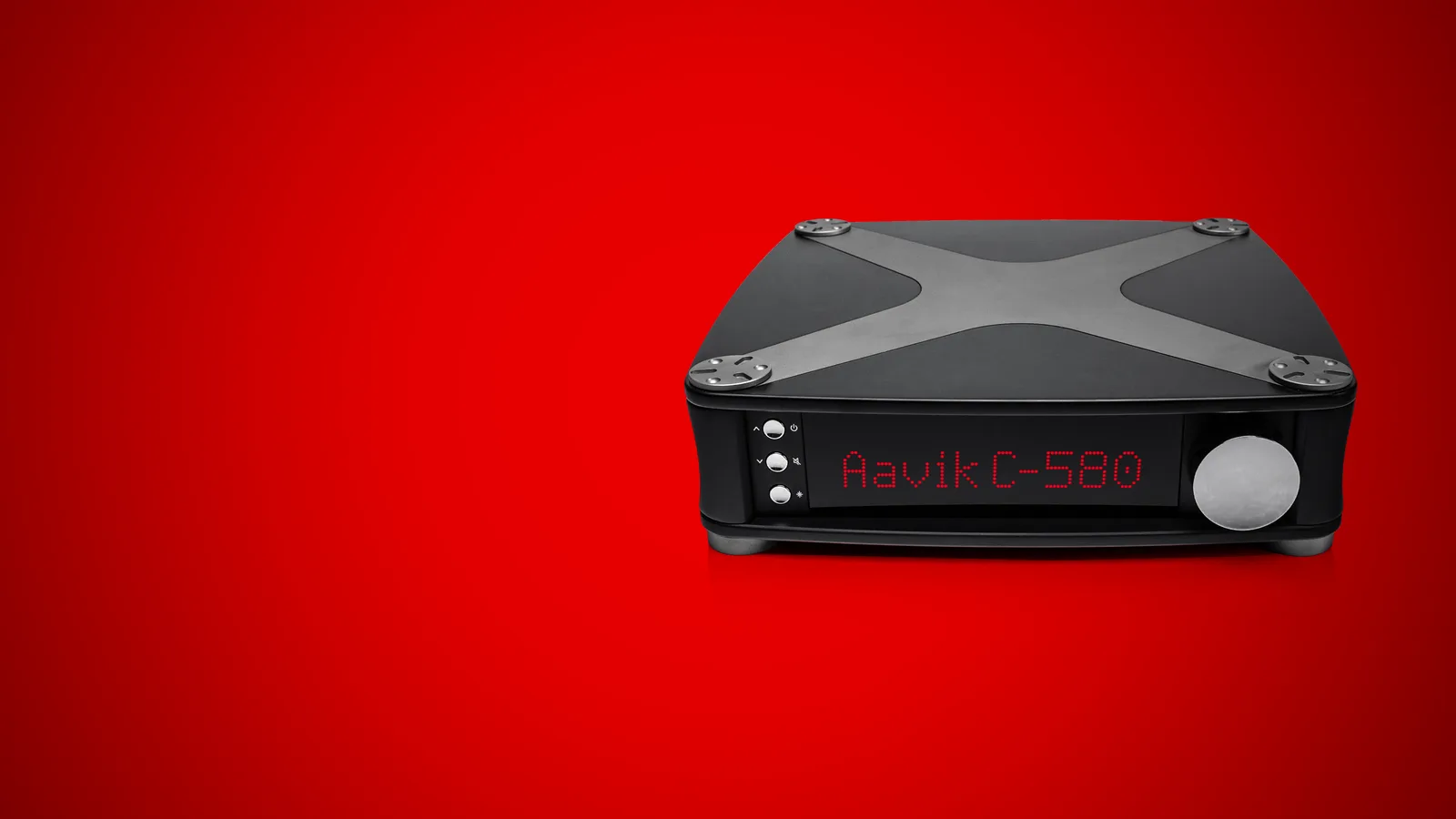


























Aavik C-280
A Scandinavian-designed reference control (pre) amplifier delivering convincing perspective, huge dynamic headroom, and an extremely quiet sound stage.
Technologies and Components
Cutting edge audio high-tech. By dividing the integrated amplifier into separate pre- and control amplifiers, we have created the Aavik P-series and the Aavik C-series. This has made it possible to reduce the noise floor to an even lower level, refine the signal, and increase the power resources. Furthermore, this division has created space for new technologies, which have further contributed to an even larger sound stage with an extremely quiet background.
- Distortion: 0.005%
- Active Tesla coils: 72 pcs
- Analog crossover frequency: 60–160 Hz
Scandinavian Design
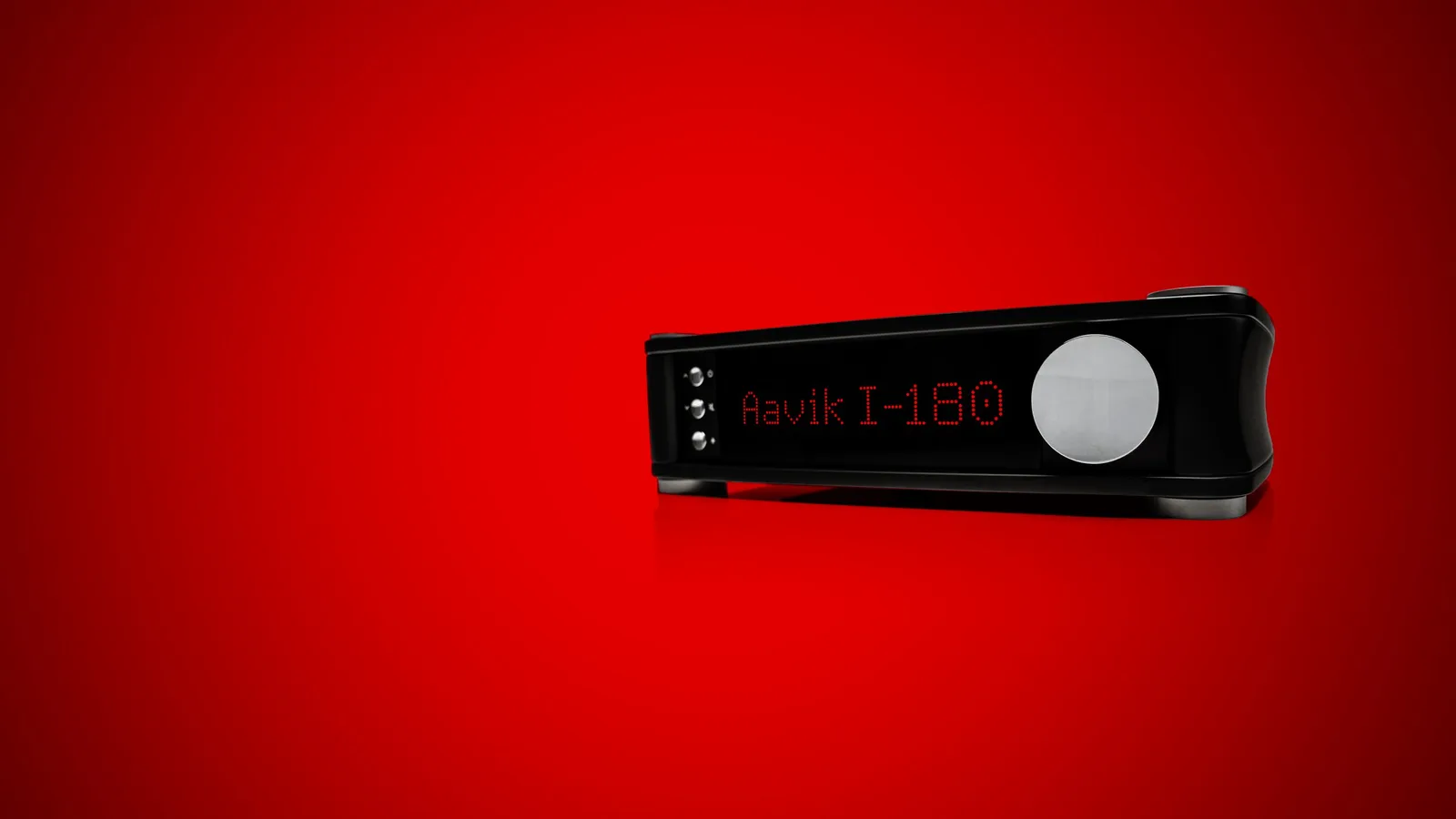
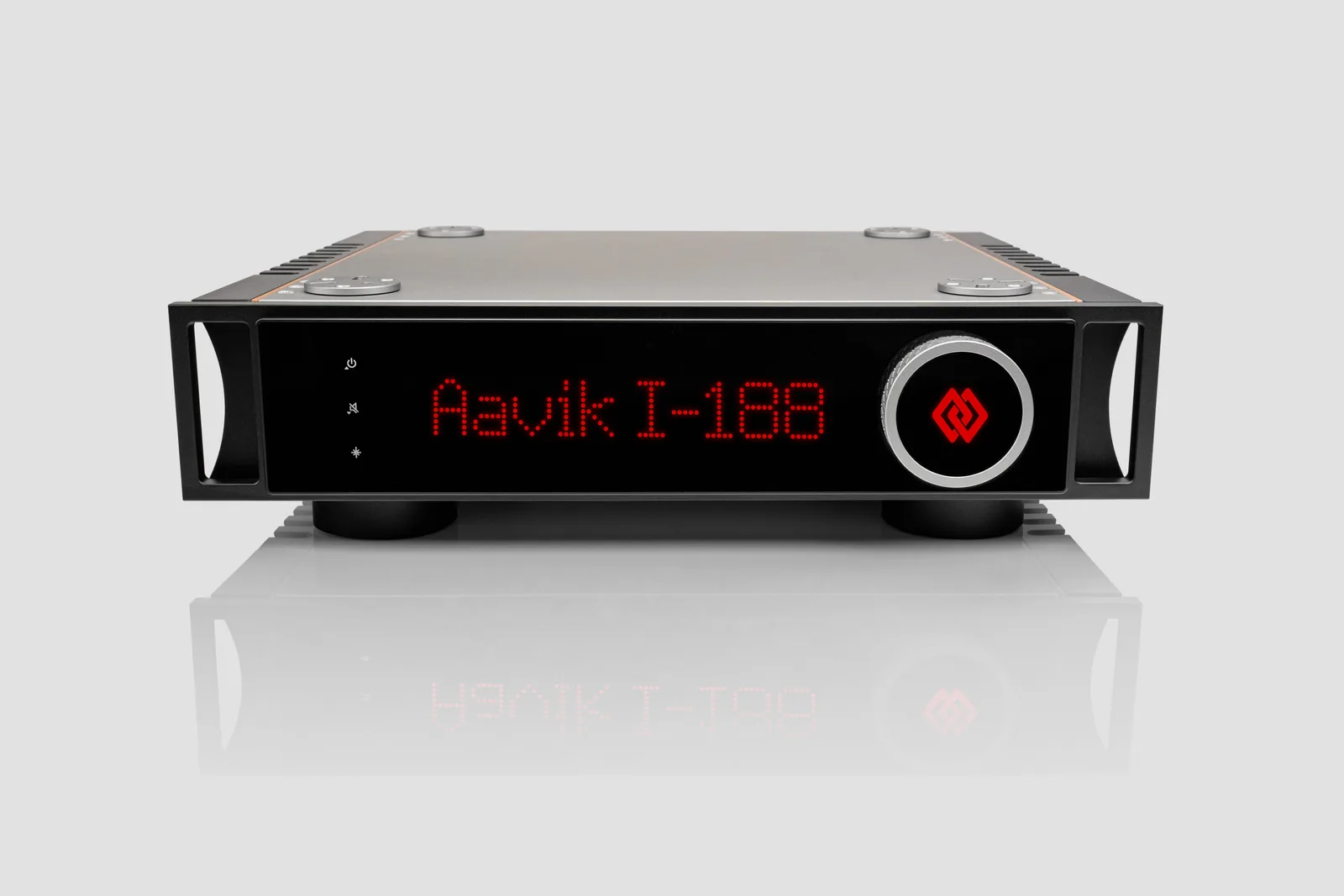
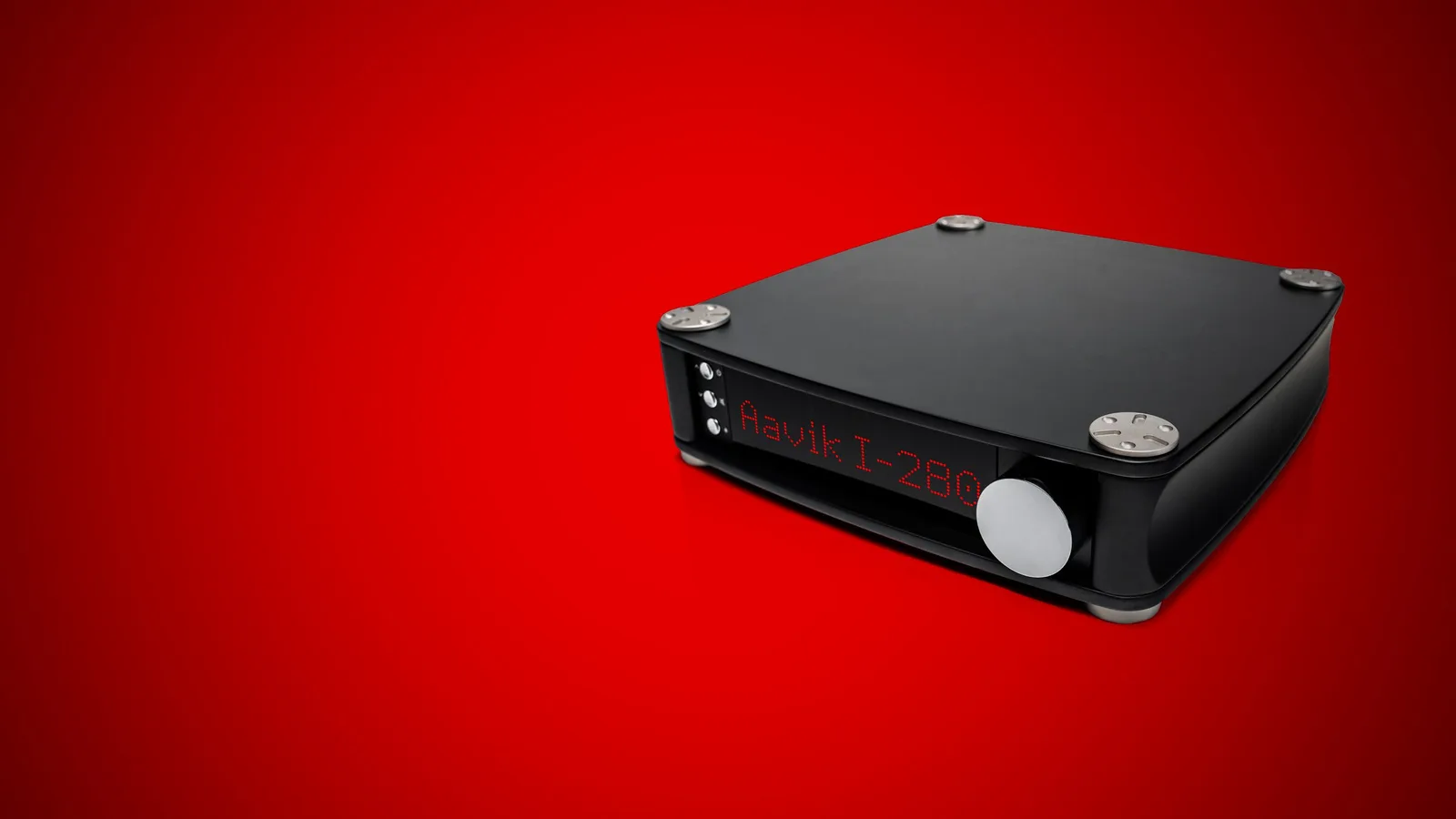
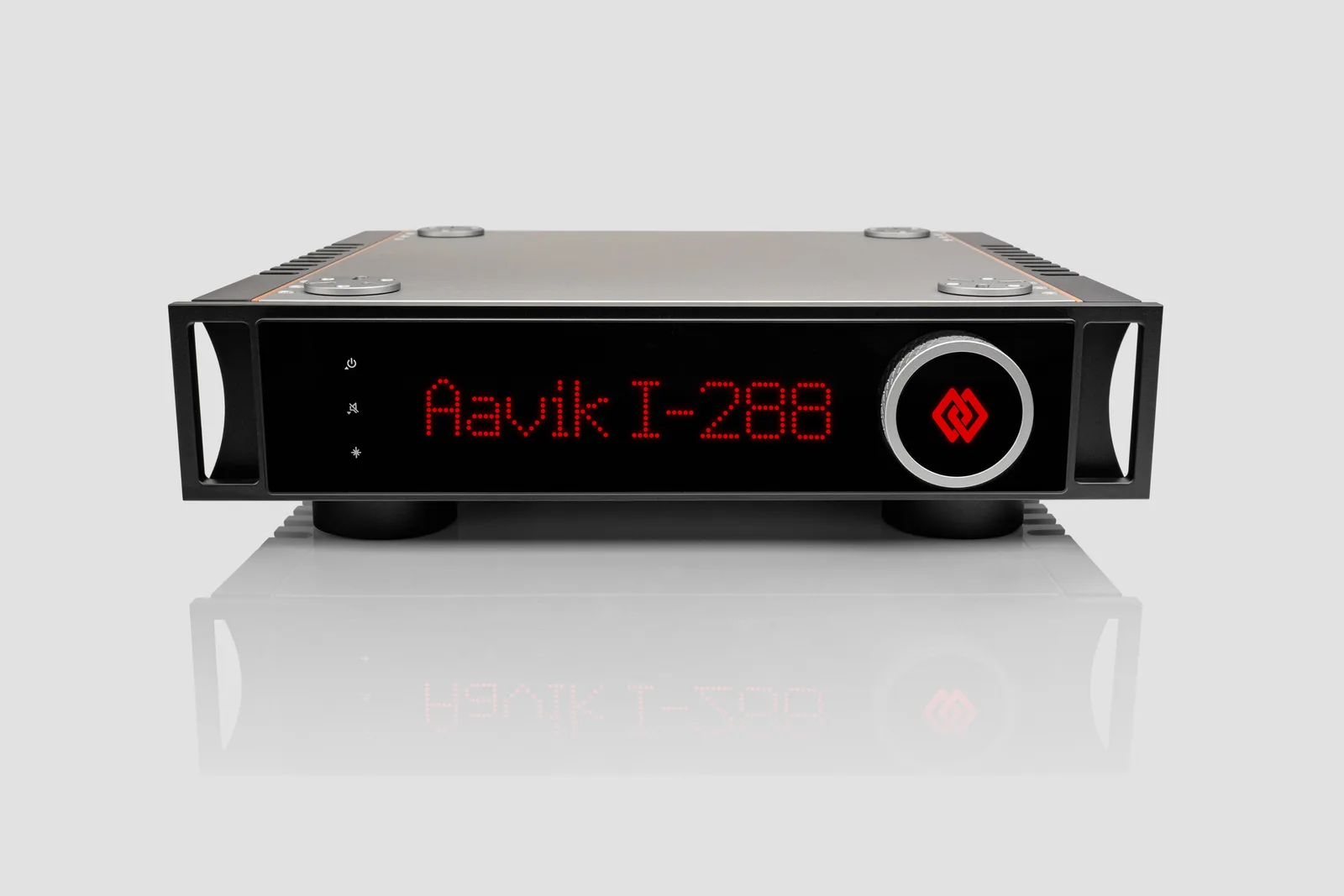
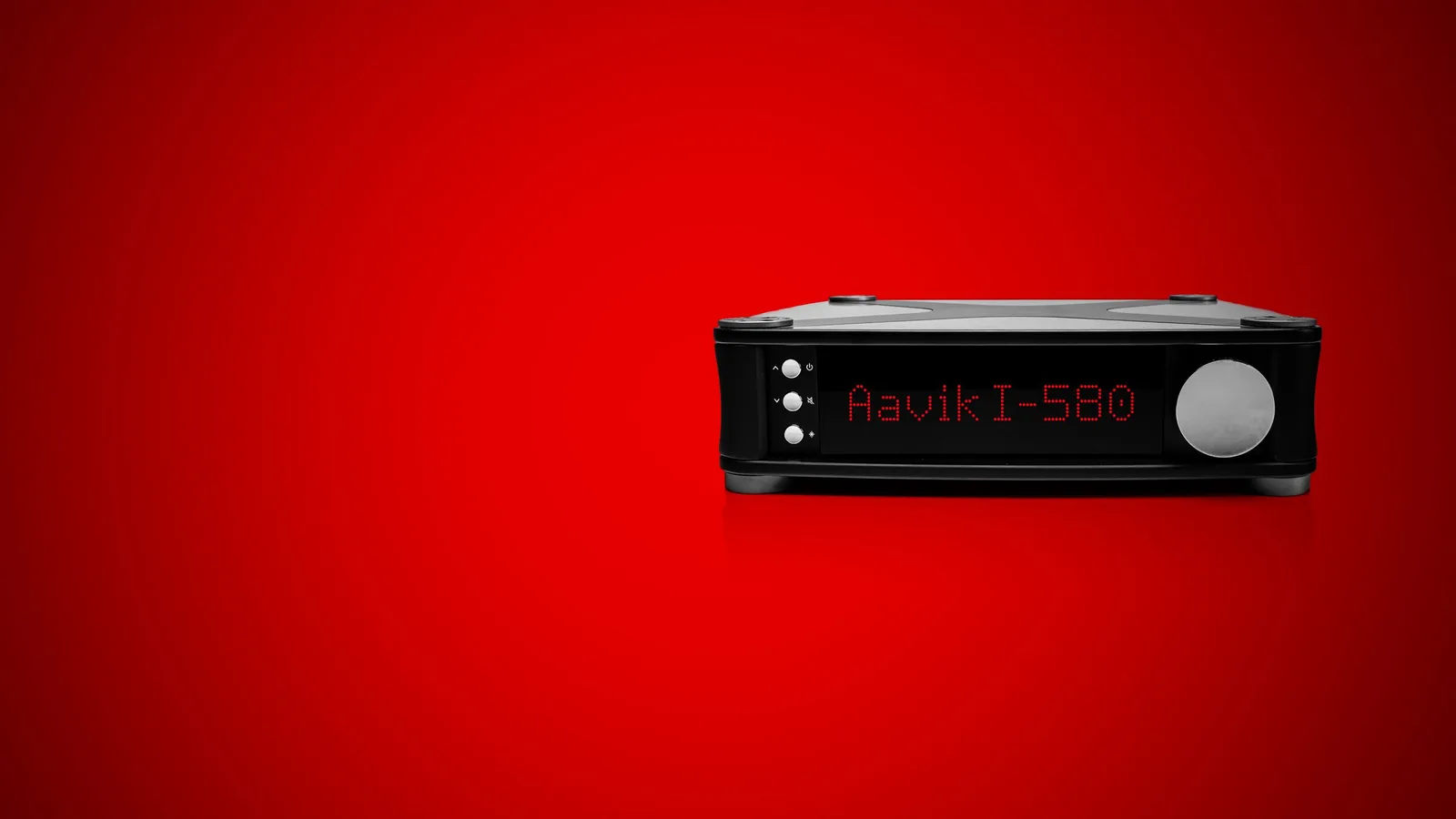
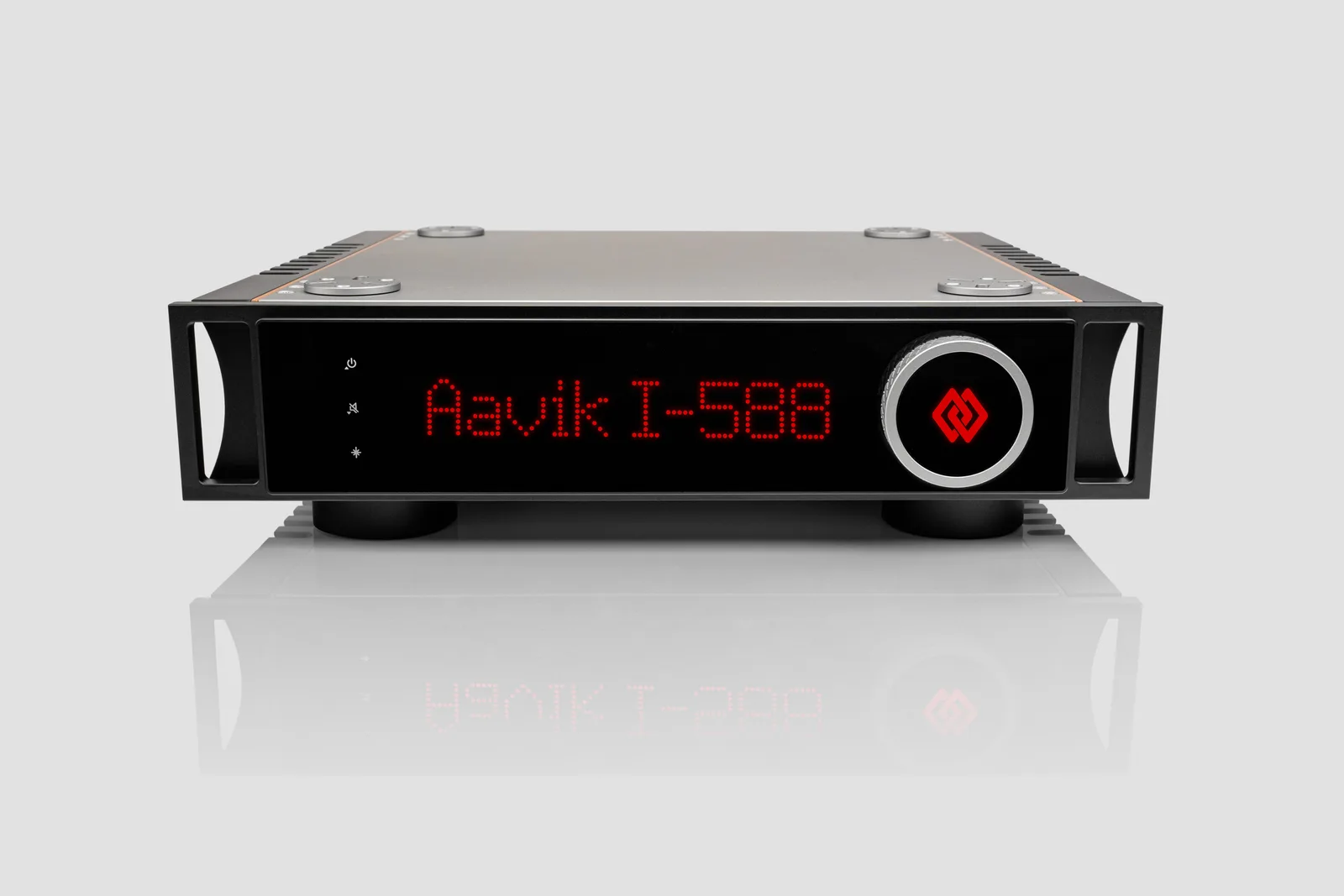
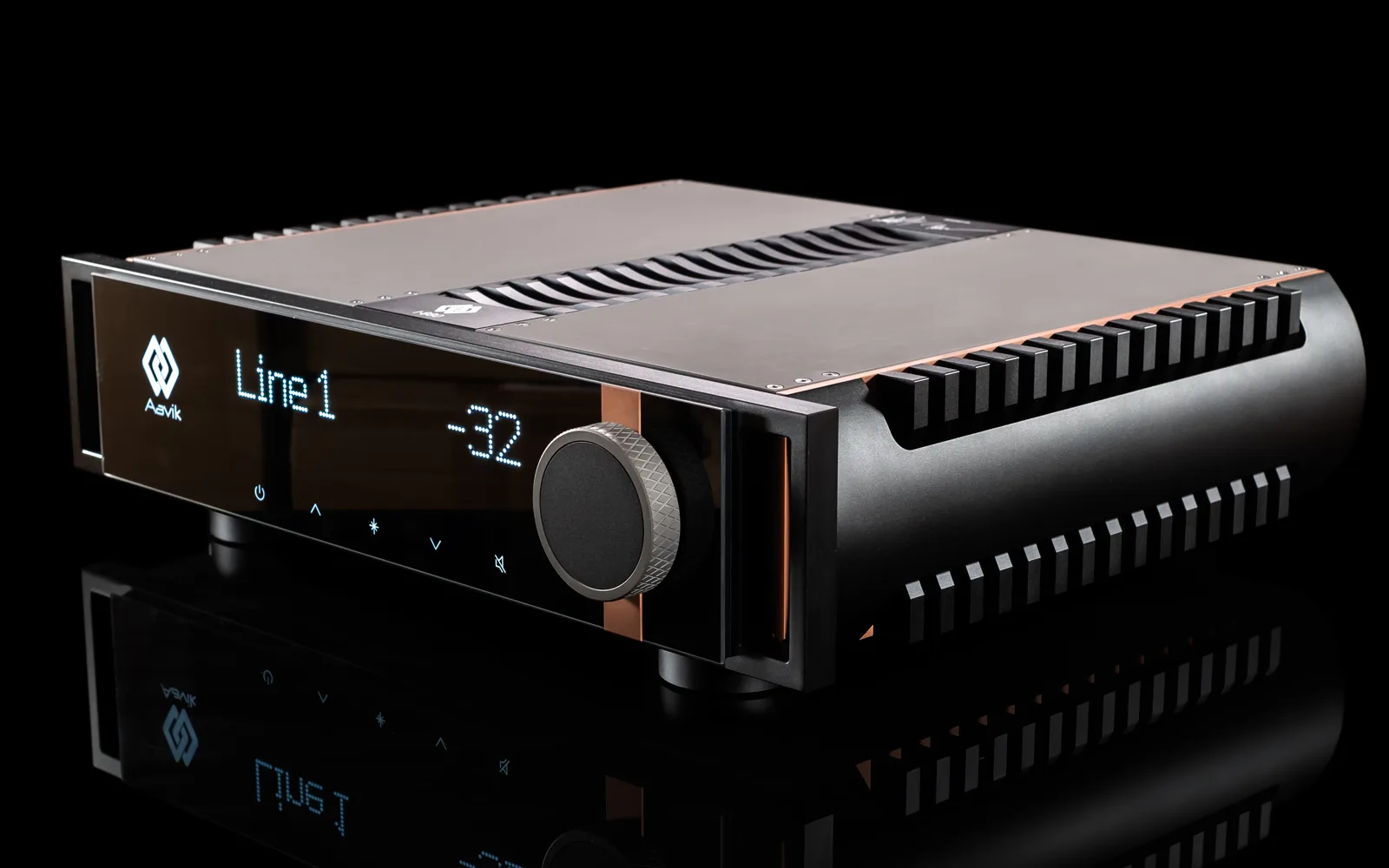
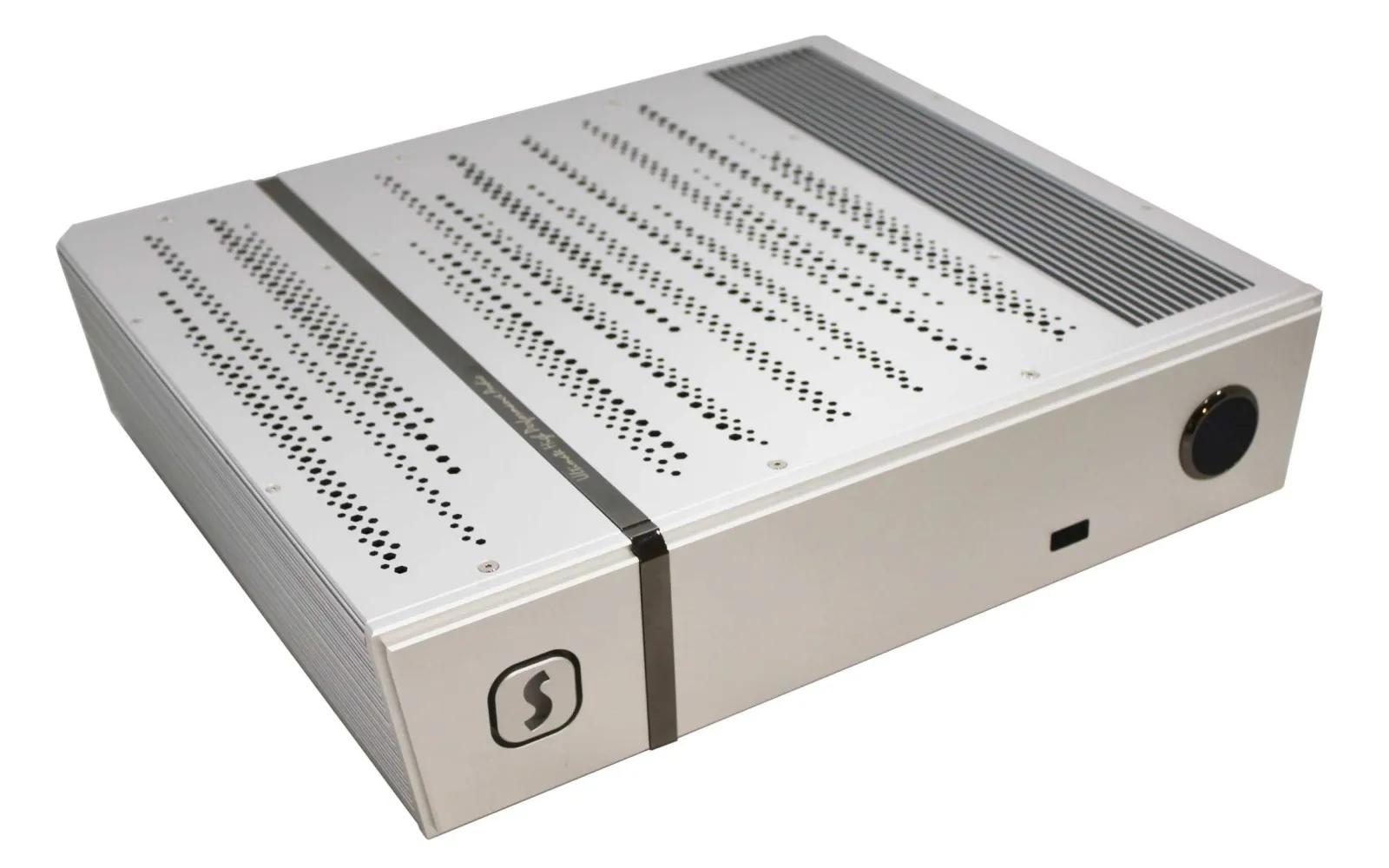
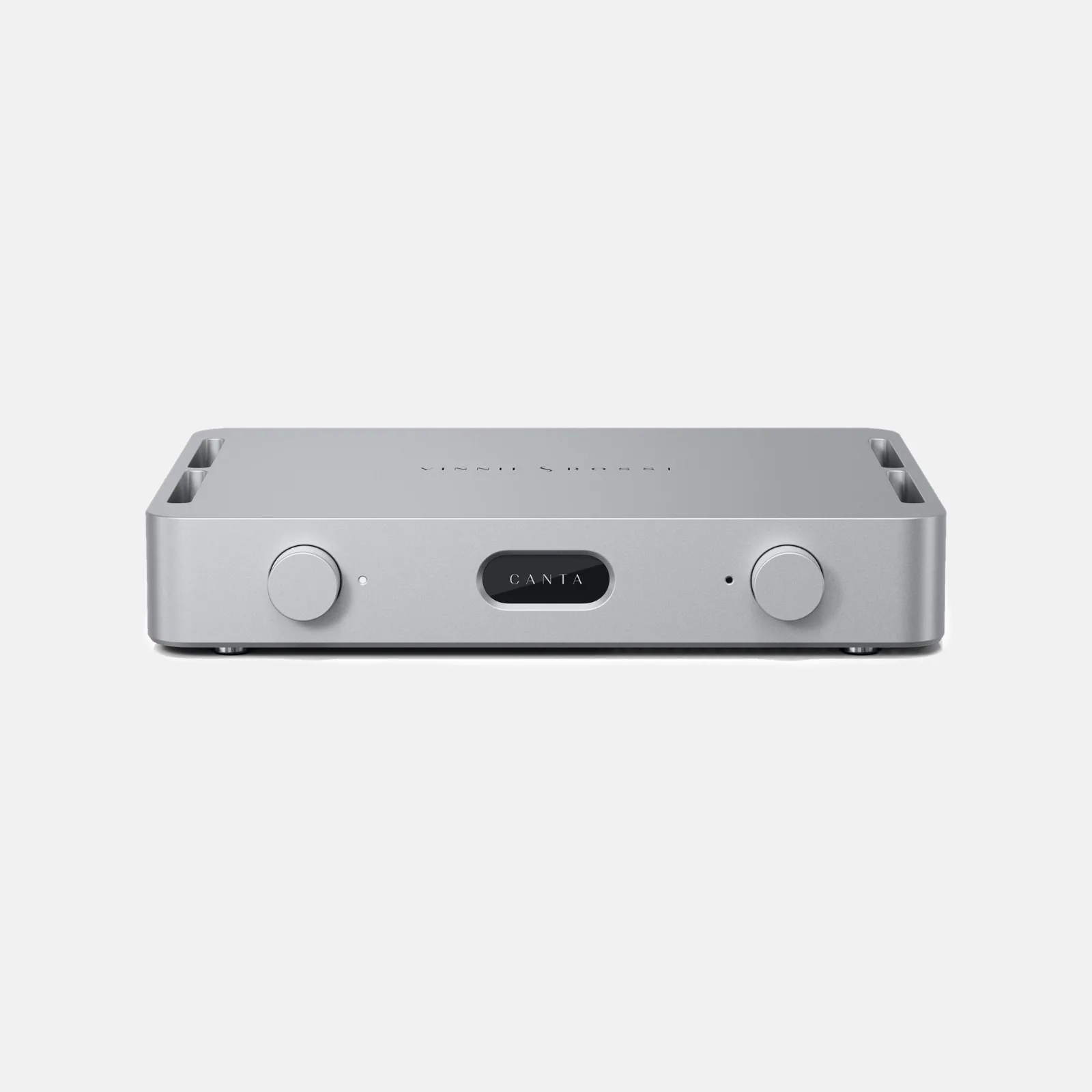
The Aavik design is Scandinavian understatement and expresses simplicity and minimalism featuring only a few buttons for logical operation. The multifunctional main knob allows you to navigate and control the various functions. We have boosted the self-confidence with a huge red display, which makes it easy to read all details of the selected operational settings.
Cabinet with Excellent Sonic Qualities
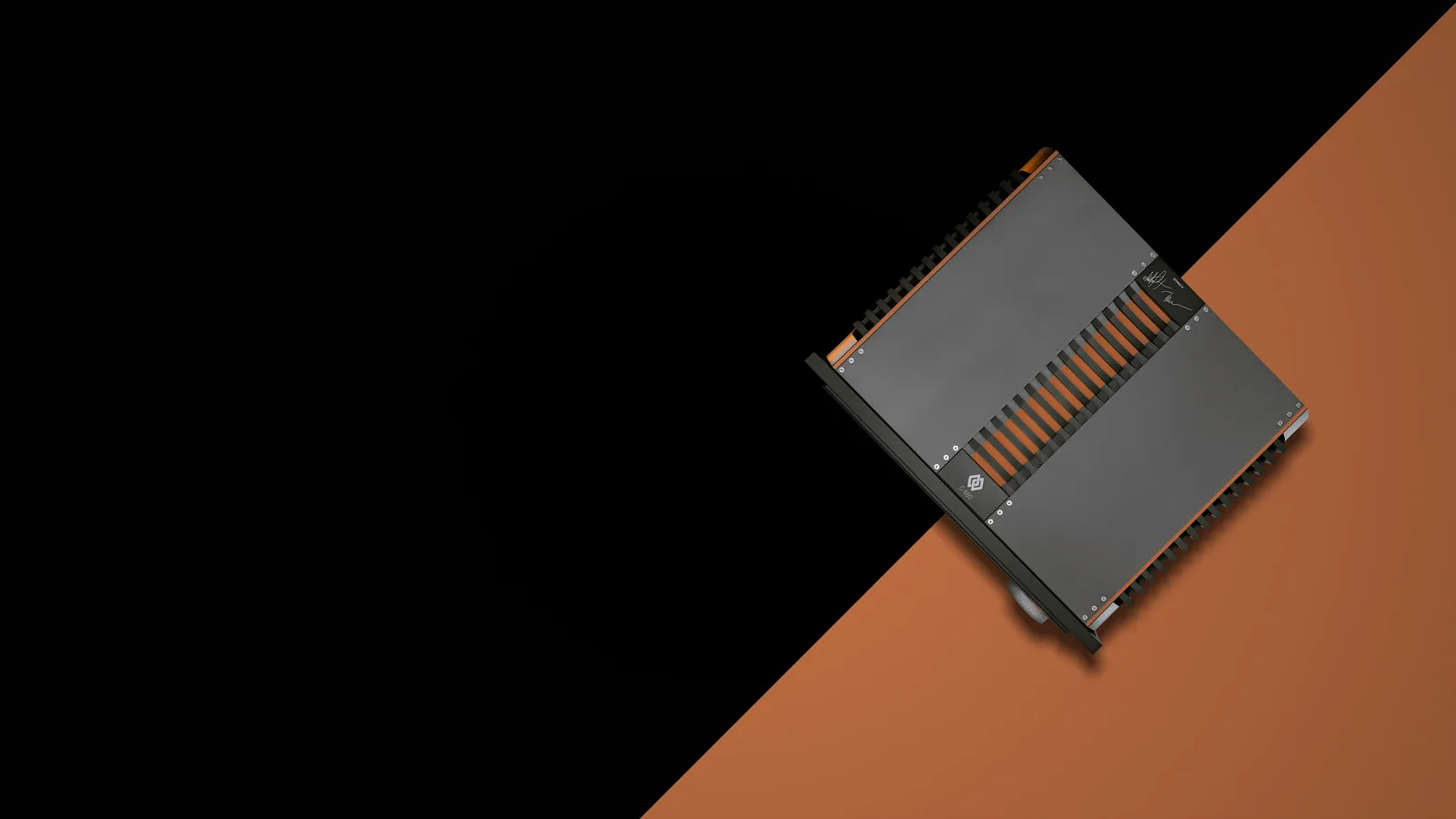
The cabinet design represents an Aavik characteristic. The testing of new circuits and electronic components is often done without the enclosing cabinet. The disturbing sonic influence, which emanates from the material the cabinet is made of – mostly aluminium – results from its mechanical resonance. To eliminate this sonic distortion, the challenge was to minimize the use of aluminium in the cabinet to the absolute minimum that is unavoidable to ensure sufficient cooling. We began testing various materials and designed an innovative natural-based composite material, which reduces the mechanical influence, particularly the hysteresis. The sonic result is distinctly audible and reflects a further prominent cornerstone in Aavik's quest for the ultimate music experience.
Shaping: Built Like an Instrument
Our untiring endeavour to unlock further untapped sonic potentials to advance the quality of the listener's musical experience prompted us to look into the design and construction of musical instruments – both in terms of shape, as well as choice of material. A combination of the natural-based composite material, the contours and the ratio of the sizes can impact and define the tone. Too much damping kills the dynamics, whereas metallic resonances generate a bright and peaky sound – Aavik's engineered enclosure offers the best of both worlds: an authentic sound that is warm, harmonious, and powerful, yet, at the same time, so crisp and refined that it highlights every single detail in the music.
Separates: No Compromise
The decision to build separate units reflects Aavik's intent of space management without any sonic compromise. Allowing sufficient space for each segment has also influenced the integration of a high-grade power supply with a huge capacity and paved the way for an effective cooling design. By separating the individual units and redesigning them in a totally isolated fashion, the Aavik series has gained in dynamic momentum and a more expansive sound.
Separate Power Supply
The Aavik series is designed to ensure massive power resources with ultra-low noise. When more power is needed, the operating frequency increases, which, in turn, has the advantage that the power density also increases, thus allowing higher peak power when required by the music. The noise floor in the raw power supply is extremely low and is even further lowered by the ultra-low noise regulators supplying the different parts of the circuit. The noise of these regulators is measured in a few microvolts respectively nanovolts, which is significantly lower than the noise level of conventional regulators.
Active Analog Crossover
The Aavik active analog crossover secures a precise timing in the delivery of sound signals to the receiving components. This is essential to avoid a harsh and compressed sound. The Aavik active crossover has been designed to either very precisely control a subwoofer or, with the integrated low pass and high pass filter, to control a 2.1 home theater system. Alternatively, Aavik's analog crossover can function as analog room correction control.
Subwoofer Control
Since the crossover is analog, there is no latency. The timing of the signal transfer to both the speakers and the subwoofer is absolutely precise. This results in an utmost pristine and authentic sound. Other conventional crossovers, such as DSP, transport the signal through a digital circuit. This results in a latency of 15-20 msec. The effect of a failing precision in the timing of the signal transfer to the speakers, respectively the subwoofer, impairs an authentic audio reproduction, creates a compressed sound and adds a harsh tone to the music.
2.1 Audio Setup
By using the low pass and high pass filter, the sound performance of your individual speakers can be optimized. When directing the low frequencies to the subwoofer, more energy to the main speakers will be released. To ensure an even volume of the speakers and the subwoofer, the gain on the high pass and the low pass filter can separately be controlled.
Analog Room Correction
Room correction is a matter of identifying and eliminating room resonance. The one specific resonance that creates an unpleasant and disturbing sound is a pressure resonance resulting from the given size of the room – subjectively, it feels like a 'boom' emanating from the speakers. To eliminate this room specific resonance, the Aavik amplifiers can adapt their audio performance and make allowances for any given room size. Both the low pass and high pass filter allow the listener to set the exact frequency progress around those low frequencies which cause this disturbing 'Boom' effect.
Volume Control: Affects the Sonic Experience
The Aavik line stage boasts a unique, inverted, virtual GND amplifier topology, which provides the highest stability. The feedback gets so powerful that it allows the signal to be damped to a gain lower than 1. This preserves the full signal with the lowest S/N Ratio – no matter if you turn the volume up or down. This will provide your loudspeakers with a clear and distinct information flow to make even the finest details of timbral and textural nuances audible on an extremely quiet sound stage.
The Tesla Coil Principle
The principle is to have two coils that are wound in each direction / a coil and a counter coil. In Ansuz words: 'a double inverted coil' – the two coils are both carrying voltage – and when the Tesla coil encounters a voltage spike a counter spike is activated in order to eliminate the noise. As noise spikes are pure voltage and carry virtually no charge, the cancellation is quite good, but not 100%. By adding more P-TC coils in parallel the performance increases. By implementing this, the perceived blackness in the music improves significantly. Ansuz Tesla coils are available in various types as they complement each other in terms of strengths and weaknesses.
Active Tesla Coil: Effective Noise Killer
The active Tesla coils are power supplied which secures a remarkably lower impedance and thus a better ability to eliminate noise. The active version is about three to four times more efficient than passive Tesla coils.
Active Square Tesla Coils: Impressive Noise Reduction
The active square Tesla coils are embedded in our circuitry boards – one coil on the top and the counter coil on the rear side. The principle is exactly the same as the active Tesla coil and thus offers a great ability to eliminate noise compared to the passive Tesla coil.
Analog Dither Technology: Extended Musicality
This technology is another noise reduction technology. The technology originates from radars where it secured a stronger signal and thus a wider range. Ansuz active Tesla coils are sending pulsated signals in well-defined frequencies. These signals are sent in counter phase and thus eliminate the noise floor whereby the music signal is significantly increased.
Technical Specifications
- Gain, Line 1-4: 5-15 dB, maximum input 4.5 V RMS
- Gain, Line 5: 1-11 dB, max input 6.5 V RMS
- Input impedance: 10K ohm
- Line out: 1 x RCA
- Max output: 8.5 V RMS
- Distortion, line stage: <0.005% (THD at 1 kHz, 1 V input)
- Output impedance: 50 ohm
- Volume control: 76 dB in 1 dB steps
- Active Tesla Coils: 72
- Active Square Tesla Coils: 156
- Dither circuitry: 7
- Power consumption, standby: <1 W
- Power consumption, operating: <12 W
- Crossover frequency (optional module): 60-160 Hz
- High pass slope: 12 dB/octave
- Low pass slope: 24 dB/octave
- Dimensions (L x W x H): 400 x 384 x 102 mm (14 61/64 x 15 1/8 x 4 1/64 inch)
- Weight: 6.1 kg (13.45 lbs)
- Weight with crossover: 6.2 kg (13.67 lbs)